
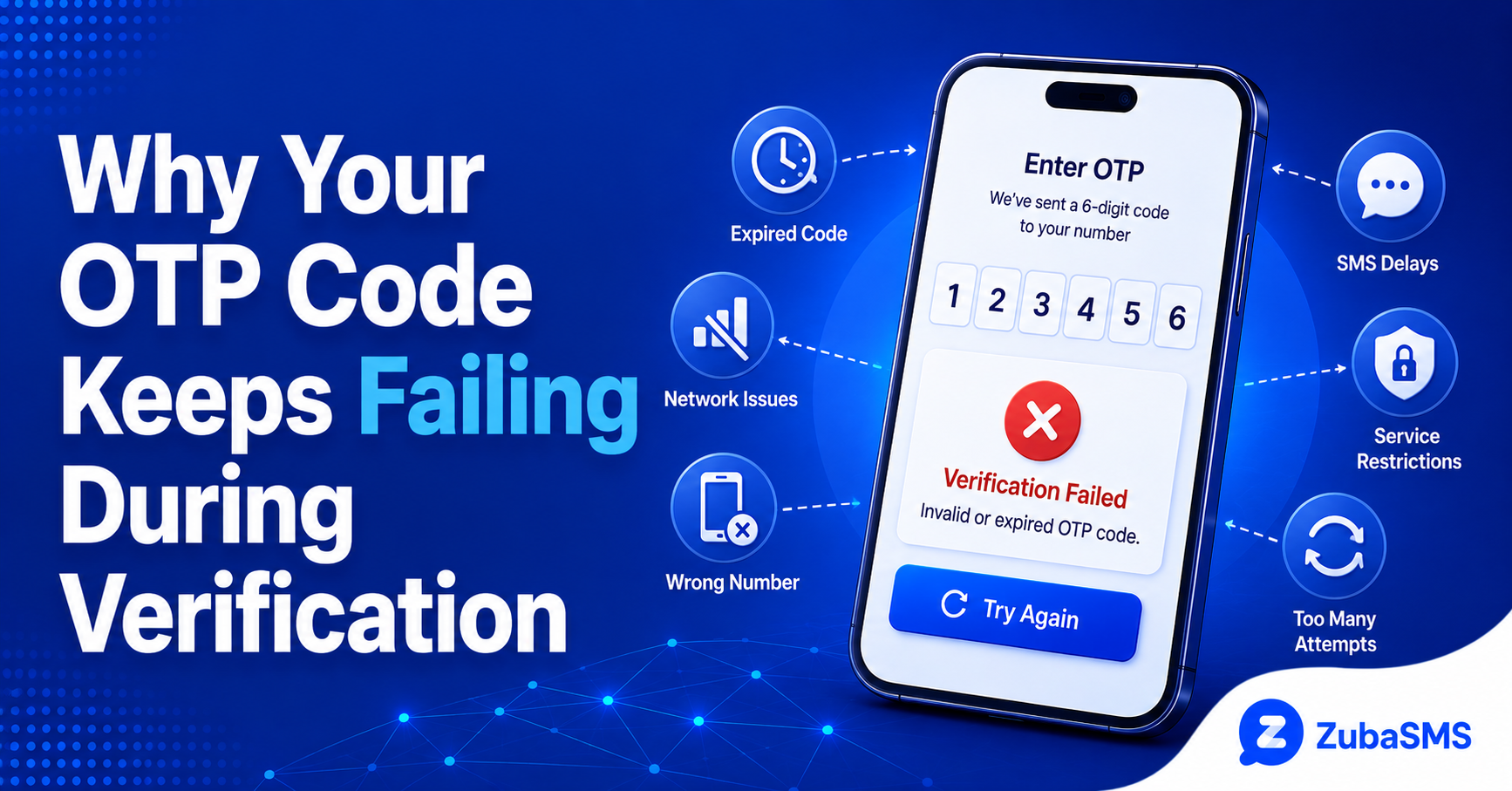
Why Your OTP Code Keeps Failing During Verification
Why Your OTP Code Keeps Failing During Verification
Seeing an OTP verification failed message can be frustrating, especially when you have received the verification code but the platform still refuses to accept it.
One-time passwords, commonly called OTPs, are designed to confirm that you have access to a specific phone number or account. Because they are security-sensitive, OTPs usually have strict expiration times and usage rules.
A failed OTP does not always mean that the code was entered incorrectly. The problem can also be caused by expired codes, delayed SMS delivery, requesting multiple codes, or temporary verification restrictions.
This guide explains why OTP verification fails and what you can do to troubleshoot the problem.
What Does “OTP Verification Failed” Mean?
An OTP verification failed message means that the verification system could not validate the one-time code you entered.
This can happen when:
- The code is incorrect.
- The OTP has expired.
- You entered an older code.
- The code was already used.
- The SMS arrived late.
- The verification session has expired.
- The platform temporarily restricted verification attempts.
The exact cause depends on the platform and its verification system.
How OTP Verification Works
Most OTP verification systems follow a simple process:
- You enter your phone number.
- The platform generates a one-time code.
- The code is delivered through SMS or another supported method.
- You enter the code into the verification screen.
- The platform checks whether the code is valid.
- Your phone number or account is verified.
The code is normally linked to a specific verification session and is not intended for repeated use.
Common Reasons OTP Verification Fails
1. You Entered the Wrong Code
A simple typing mistake is one of the most common reasons an OTP fails.
Check each digit carefully before submitting the code.
2. The OTP Has Expired
OTP codes are usually valid for only a limited period.
If you wait too long before entering the code, the platform may reject it even when every digit is correct.
When this happens, request a new code and use the latest valid OTP.
3. You Requested Multiple Codes
Requesting several OTPs can create confusion because each new request may generate a different code.
In some systems, requesting a new code invalidates the previous one.
If several messages arrive, use the newest valid code associated with the current verification session.
4. The SMS Arrived Late
SMS delivery is not always immediate.
Delays can occur because of:
- Mobile carrier congestion.
- Network problems.
- International SMS routing.
- Provider infrastructure.
- Delays from the sending platform.
If an OTP arrives after it has expired, request a new code rather than repeatedly entering the old one.
5. Too Many Failed Attempts
Many platforms limit the number of incorrect OTP submissions allowed within a certain period.
After several failed attempts, you may see messages such as:
- Too many attempts.
- Try again later.
- Verification temporarily unavailable.
If this happens, stop entering codes and follow the platform's stated cooldown instructions.
6. The Verification Session Has Expired
Some OTP systems connect the code to a particular login or registration session.
If you leave the verification page open for too long or restart the process, the original code may no longer be associated with the current session.
Starting a fresh verification request can resolve this type of problem.
How to Fix OTP Verification Failed Errors
If your OTP keeps failing, try these steps:
- Check that you entered the correct phone number.
- Confirm the country code.
- Request a new OTP if the previous one has expired.
- Use the newest code received.
- Enter the code carefully.
- Avoid requesting multiple codes rapidly.
- Wait if the platform has imposed a temporary restriction.
- Contact official support if verification continues to fail.
These steps address most common OTP verification problems without creating additional failed attempts.
Why the Newest OTP Is Usually the Best One to Use
When you request multiple codes, the verification system may invalidate earlier codes.
For example, if you request one code and then immediately request another, the first code may no longer work.
Instead of trying every code you receive, wait for the latest message and enter that code once.
Check Your Phone Number and Country Code
Before requesting another OTP, confirm that the phone number used for verification is correct.
Check:
- Every digit of the phone number.
- The selected country.
- The international country code.
- Whether the number is active.
- Whether the number can receive SMS.
If the wrong number was entered, a new OTP will not solve the underlying problem.
What If the OTP Arrives but Still Fails?
If you receive the SMS but the code is rejected, the issue may be related to the code rather than SMS delivery.
Possible causes include:
- The code has expired.
- A newer OTP has invalidated the previous one.
- The code was already submitted.
- The verification session has expired.
- Too many incorrect attempts have been made.
Request a fresh code and enter it carefully when the new verification session is active.
Do Not Keep Guessing OTP Codes
OTP codes are security credentials, not passwords that should be guessed.
If a code fails, avoid repeatedly entering different combinations or repeatedly submitting the same code.
Multiple failed submissions may trigger additional security restrictions.
If you are unsure which code is valid, request a new one through the official verification process.
Virtual Numbers and OTP Verification
Some virtual phone numbers can receive SMS, but not every platform accepts every type of virtual number for verification.
Platforms may restrict:
- Temporary numbers.
- Shared numbers.
- VoIP numbers.
- Previously used numbers.
This means an OTP verification failed error can sometimes be related to the phone number type rather than the OTP itself.
Check the platform's requirements before trying another number.
Temporary vs Rental Numbers
| Feature | Temporary Number | Rental Number |
|---|---|---|
| Access Period | Short-term | Longer-term |
| Continuity | Limited | Better while active |
| Future OTP Access | Less predictable | More practical |
| Best For | Short-term needs | Ongoing access |
If continued access to the same number is important, a longer-term number that you control may be more suitable than a temporary number.
How to Prevent OTP Verification Problems
A few simple habits can reduce failed verification attempts.
- Enter your phone number carefully.
- Use the correct country code.
- Wait for the OTP instead of repeatedly pressing resend.
- Use the newest code received.
- Enter the code before it expires.
- Avoid repeated failed submissions.
- Keep your phone connected to a reliable network.
- Use a supported number type.
Security Best Practices
Verification codes should always be treated as private security information.
- Never share an OTP with another person.
- Only enter OTPs on the official website or application.
- Do not send verification codes through chats or social media.
- Be cautious of unexpected OTP requests.
- Use additional account-security features when available.
If you receive a code that you did not request, do not share it with anyone.
Frequently Asked Questions
Why does my OTP keep failing?
The code may be incorrect, expired, already used, or associated with an earlier verification session. Too many attempts can also temporarily restrict verification.
Why does my OTP say invalid when I entered it correctly?
The code may have expired or been replaced by a newer OTP. Request a new code and use the latest valid one.
Why do I receive OTPs late?
Carrier congestion, network conditions, international routing, and platform-side delays can affect SMS delivery.
Can requesting multiple OTPs cause verification to fail?
Yes. Some platforms invalidate previous codes when a new one is requested, and repeated requests can trigger temporary verification limits.
What should I do after too many failed OTP attempts?
Stop submitting codes and wait for the platform's stated cooldown period. Then start a fresh verification attempt if necessary.
Can a virtual number cause OTP verification failed errors?
Yes. Some platforms restrict certain virtual, temporary, shared, or VoIP numbers even when those numbers can receive SMS.
Should I use an old OTP if it arrives late?
If the code has expired or a newer code was requested, it may no longer work. Request a fresh OTP instead.
Funding Options
| Location | Funding Method |
|---|---|
| Nigeria | Bank Transfer |
| Ghana | Mobile Money |
| Kenya | M-Pesa |
| International | USDT |
Payment methods and availability may change, so check the provider's current funding options before making a purchase.
Using ZubaSMS
ZubaSMS provides virtual phone numbers for supported SMS reception and legitimate communication and verification needs, depending on availability and platform compatibility.
If you experience an OTP verification failed error, first check whether the selected number is active, supports incoming SMS, and is accepted by the platform you're using.
If the platform rejects the number or verification remains unavailable, follow the platform's official verification or support process rather than repeatedly requesting codes.
Explore ZubaSMS virtual numbers
Conclusion
An OTP verification failed error can happen for several reasons, including incorrect codes, expired OTPs, delayed SMS delivery, multiple verification requests, and platform restrictions.
The best approach is to verify your phone number, request a fresh code when necessary, use the newest valid OTP, and avoid repeated attempts.
If the problem continues, check the platform's official support information and confirm that your phone number and number type are supported.
Keeping verification codes private and following the platform's normal verification process can also help protect your account while reducing unnecessary verification failures.