
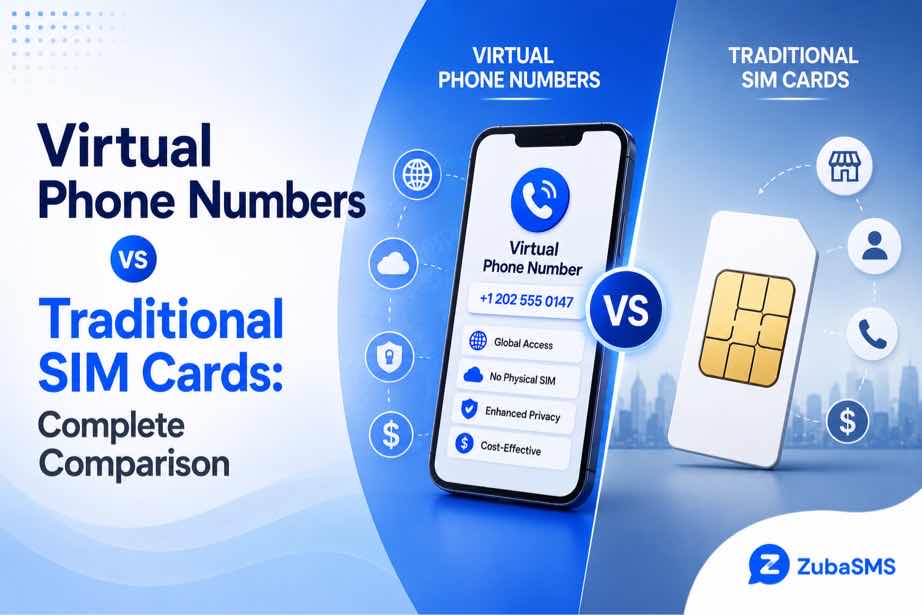
Virtual Phone Numbers vs Traditional SIM Cards: Complete Comparison
Virtual Phone Numbers vs Traditional SIM Cards: Complete Comparison
Modern communication has evolved far beyond physical SIM cards. Today, businesses, developers, remote workers, and everyday internet users increasingly rely on virtual phone numbers for SMS verification, online privacy, customer communication, and international access.
However, traditional SIM cards remain essential for everyday mobile connectivity, voice calls, and local cellular networks.
If you're deciding between virtual phone numbers and physical SIM cards, understanding how they differ will help you choose the solution that best matches your personal or business requirements.
This guide compares both technologies, highlights their strengths and limitations, and explains when each option is the better choice.
Table of Contents
- What Are Virtual Phone Numbers?
- What Is a Traditional SIM Card?
- Side-by-Side Comparison
- Advantages of Virtual Phone Numbers
- Advantages of SIM Cards
- Best Use Cases
- Security Considerations
- Using ZubaSMS
- Frequently Asked Questions
- Conclusion
What Are Virtual Phone Numbers?
Virtual phone numbers are cloud-based telephone numbers that receive SMS messages and, depending on the provider, voice calls without requiring a physical SIM card.
Common uses include:
- SMS verification
- Business communication
- Online privacy
- International services
- Customer support
- Online registrations
What Is a Traditional SIM Card?
A traditional SIM card is a physical chip issued by a mobile network operator that connects your smartphone to a cellular network for calls, SMS, and mobile data.
SIM cards remain the standard choice for everyday personal mobile use.
Side-by-Side Comparison
| Feature | Virtual Phone Numbers | Traditional SIM Cards |
|---|---|---|
| Physical SIM Required | No | Yes |
| SMS Verification | Excellent | Excellent |
| International Numbers | Easy | Requires local SIM |
| Privacy | High | Personal number exposed |
| Mobile Data | Not typically included | Yes |
Advantages of Virtual Phone Numbers
- No physical SIM card required.
- Improved privacy.
- Easy access to multiple countries.
- Ideal for SMS verification.
- Business-friendly.
- Flexible temporary and rental options.
Advantages of Traditional SIM Cards
- Native mobile network access.
- Reliable voice calls.
- Mobile internet connectivity.
- Suitable for everyday personal use.
- Carrier support.
Best Use Cases
Choose Virtual Phone Numbers If:
- You need SMS verification.
- You want greater privacy.
- You require international numbers.
- You manage business communications.
Choose Traditional SIM Cards If:
- You need everyday mobile service.
- You require cellular data.
- You make frequent voice calls.
- You rely on local carrier coverage.
Security Considerations
Protect Verification Codes
Whether you use virtual phone numbers or traditional SIM cards, never share one-time passwords (OTPs) or SMS verification codes with anyone.
Choose Trusted Providers
If using virtual phone numbers, select providers with reliable SMS delivery, transparent privacy policies, and secure account management.
Use Rental Numbers for Important Accounts
Rental virtual numbers are generally more suitable than temporary numbers for accounts that may require future verification or password recovery.
Secure Your Mobile Device
Regardless of which option you choose, protect your device with strong passwords, biometric authentication, and updated software.
Enable Multi-Factor Authentication
Whenever supported, enable multi-factor authentication to provide stronger account protection beyond SMS verification.
Using ZubaSMS
ZubaSMS offers temporary and rental virtual phone numbers across multiple countries for supported SMS verification, business communication, and online registrations.
Before selecting a number, consider:
- Country availability
- Incoming SMS support
- Temporary or rental duration
- Current inventory
- Your expected long-term usage
Choosing the appropriate number type helps balance convenience, privacy, and long-term accessibility.
Funding Options
| Location | Funding Method |
|---|---|
| Nigeria | Bank Transfer |
| Ghana | Mobile Money |
| Kenya | M-Pesa |
| International | USDT |
Funding methods may change over time, so always review the latest payment options before making a purchase.
Frequently Asked Questions
Are virtual phone numbers better than SIM cards?
It depends on your needs. Virtual phone numbers are excellent for privacy, SMS verification, and business communication, while SIM cards remain the better option for everyday mobile connectivity and cellular data.
Can virtual phone numbers replace SIM cards?
Not entirely. Virtual numbers are useful for many communication tasks but generally do not replace traditional mobile service or cellular internet provided by SIM cards.
Which option is better for businesses?
Many businesses prefer virtual phone numbers because they support dedicated customer communication, international presence, and employee privacy.
Which option is better for SMS verification?
Both can receive verification codes where supported, but virtual numbers provide greater flexibility for users who need multiple countries or additional privacy.
Can I use both together?
Yes. Many users keep a traditional SIM card for daily mobile use while using virtual phone numbers for online registrations, business communication, or SMS verification.
Find the Right Virtual Phone Number
Whether you need temporary verification numbers or long-term rental virtual numbers, ZubaSMS provides virtual phone numbers across multiple countries for supported SMS verification and business communication.
Visit ZubaSMS to explore available virtual numbers.
Conclusion
Both virtual phone numbers and traditional SIM cards serve important roles in modern communication. Virtual numbers offer exceptional flexibility, privacy, international accessibility, and business convenience, while SIM cards continue to provide reliable mobile connectivity, voice services, and cellular data.
By understanding the strengths of each option, you can choose the solution—or combination of solutions—that best supports your communication, verification, privacy, and business needs.