
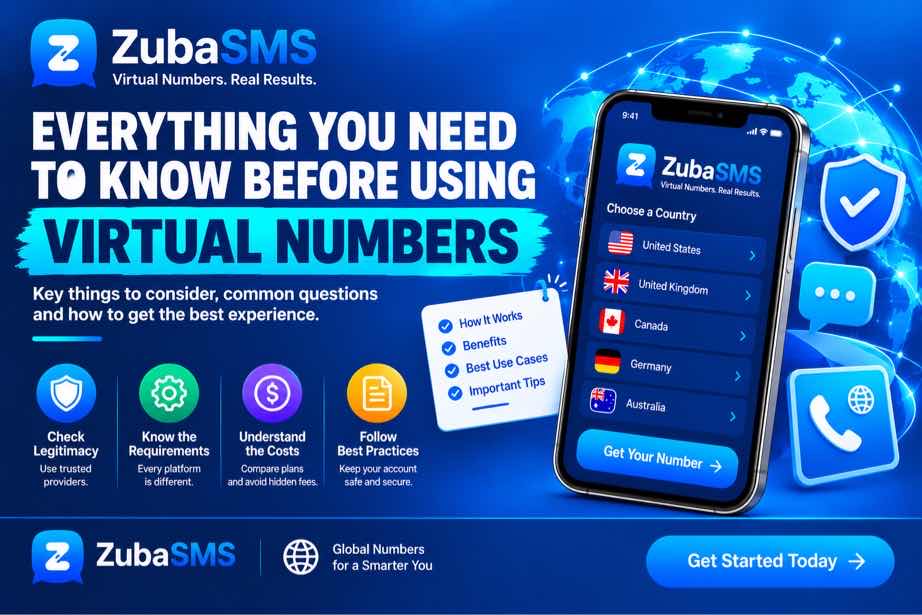
Everything You Need to Know Before Using Virtual Numbers for OTP Verification
Everything You Need to Know Before Using Virtual Numbers for OTP Verification
One-time passwords, commonly known as OTPs, are widely used to confirm phone numbers, protect accounts, and complete online verification processes. When a service sends an OTP by SMS, users need access to a phone number capable of receiving the verification message.
A virtual number for OTP can provide an alternative to using a personal mobile number for supported verification purposes. However, virtual numbers are not identical to traditional mobile numbers, and not every online service accepts them.
This guide explains what virtual numbers are, how OTP verification works, the benefits and limitations of using virtual numbers, and what you should consider before choosing one.
Table of Contents
- What Is a Virtual Number for OTP?
- How OTP Verification Works
- How Virtual Numbers Receive OTP Codes
- Why People Use Virtual Numbers for OTP Verification
- Benefits of Using a Virtual Number for OTP
- Temporary vs Rental Virtual Numbers
- Private vs Shared Virtual Numbers
- Can Every Virtual Number Receive OTPs?
- Important Limitations to Understand
What Is a Virtual Number for OTP?
A virtual number for OTP is a phone number provided through internet-based communication technology that can receive SMS messages without requiring a traditional physical SIM card in the user's device.
Depending on the provider, virtual numbers can be available for different countries and may support SMS reception, voice calls, or other communication features.
For OTP verification, the important feature is usually the ability to receive an SMS containing a one-time verification code.
For example, a typical process may look like this:
- You select a supported virtual phone number.
- You enter the number into an online service.
- The service sends an OTP by SMS.
- The virtual number receives the message.
- You view the OTP and enter it into the service.
- The service verifies the code.
The exact process varies between providers and platforms.
How OTP Verification Works
OTP verification is designed to provide a temporary code that can be used to confirm that a person has access to a particular communication channel.
When you enter a phone number during verification, the platform may generate a short code and send it by SMS. The code is normally valid for a limited period.
A basic OTP process usually involves:
- Phone number submission: You provide a phone number requested by the service.
- Code generation: The service creates a temporary verification code.
- SMS delivery: The code is sent to the selected number.
- Code entry: You enter the received OTP.
- Validation: The platform checks whether the code is correct and still valid.
- Verification: The requested action can proceed if the verification succeeds.
Because OTPs are usually time-sensitive, delayed messages can sometimes become unusable before they are entered.
How Virtual Numbers Receive OTP Codes
A virtual number can receive SMS messages through the provider's communication infrastructure.
When a supported platform sends an OTP to the number, the message is routed through mobile networks and communication systems before appearing in the provider's interface or inbox.
The user can then access the incoming message and retrieve the OTP.
However, successful SMS reception does not automatically mean that every verification platform will accept the number.
Some services use security systems that distinguish between traditional mobile numbers, VoIP numbers, temporary numbers, shared numbers, and other number categories.
As a result, number availability and platform compatibility are both important when choosing a virtual number for OTP verification.
Why People Use Virtual Numbers for OTP Verification
There are several legitimate reasons someone may prefer a virtual number instead of using a personal phone number.
1. Privacy
Some users prefer not to provide their personal mobile number to every website or online service that requests phone verification.
A separate number can help keep personal contact information separate from supported online activities.
2. Separation of Personal and Online Communication
A virtual number can provide a separate communication channel for projects, testing environments, business activities, or services that support virtual numbers.
3. Temporary Requirements
Some verification tasks are short-term. A temporary number may be useful when continued access to the number is not required.
4. International Number Access
Virtual number providers may offer numbers from different countries, making it possible to access supported communication services without obtaining a traditional SIM card from each country.
Benefits of Using a Virtual Number for OTP
When supported by the relevant platform, a virtual number can offer several practical benefits.
| Benefit | Description |
|---|---|
| Privacy | Helps separate personal numbers from supported online services. |
| Convenience | SMS messages can be accessed through an online interface. |
| Flexibility | Different number types and countries may be available. |
| Short-Term Access | Temporary numbers can be useful for limited-duration tasks. |
| Number Separation | Provides an additional communication channel for supported uses. |
These benefits depend on the provider, the number type, and the service where the number is being used.
Temporary vs Rental Virtual Numbers
One of the most important decisions is choosing between a temporary number and a number that remains available for a longer period.
| Feature | Temporary Number | Rental Number |
|---|---|---|
| Access Period | Short-term | Longer-term |
| Best For | Short verification tasks | Ongoing access |
| Number Continuity | Limited | Better continuity |
| Renewal | Usually not intended for long-term use | May require renewal |
| Main Consideration | Expiration | Continued access and cost |
If you expect to need the same number again in the future, a longer-term option may be more practical.
On the other hand, a temporary number may be sufficient when the verification requirement is genuinely short-term.
Private vs Shared Virtual Numbers
Virtual numbers can also differ in whether they are dedicated to one user or shared among multiple users.
| Feature | Private Number | Shared Number |
|---|---|---|
| Access | More controlled | May be accessible by multiple users |
| Privacy | Generally better | Lower |
| Continuity | Better for ongoing use | More limited |
| Best For | Longer-term communication | Supported short-term tasks |
For sensitive or important accounts, users should carefully consider whether a temporary or shared number is appropriate.
Can Every Virtual Number Receive OTPs?
No. Not every virtual number is guaranteed to receive every type of OTP message.
Several factors can affect SMS delivery:
- The provider's SMS capabilities
- The number's country and carrier routing
- The type of message being sent
- The platform's messaging infrastructure
- Restrictions placed on virtual or VoIP numbers
- Whether the number is currently active
Some services may also block certain number types as part of their security policies.
For this reason, it is important to check compatibility before relying on a virtual number for an important verification process.
Important Limitations to Understand
Virtual numbers can be useful, but they are not a universal replacement for traditional mobile numbers.
Before using one for OTP verification, remember that:
- Some platforms do not accept virtual numbers.
- Some OTP messages may be delayed.
- Temporary numbers can expire.
- Shared numbers may provide less privacy.
- A previously used number may have compatibility issues.
- Not every SMS type is supported by every provider.
The platform sending the OTP ultimately determines whether the selected number is accepted for verification.
What to Check Before Using a Virtual Number for OTP
Before choosing a virtual number for OTP verification, take a moment to understand the number and the service you are using. This can help prevent unnecessary verification failures.
1. Check SMS Support
Confirm that the number supports incoming SMS messages. Some virtual numbers are designed for voice calls or other communication features and may not support the type of SMS you need.
2. Check Number Availability
Number availability can change based on country, carrier, demand, and provider inventory. Make sure the required number is available before starting the verification process.
3. Check the Number Type
Find out whether the number is temporary, rental, dedicated, or shared. Each option provides a different level of access and continuity.
4. Check Platform Compatibility
Not every platform accepts virtual or VoIP numbers. If the service has restrictions on certain number categories, the verification attempt may fail even when the number can receive SMS.
5. Check Access Duration
If you may need the number again later, make sure you understand how long you can access it. A temporary number may not be suitable for an account that requires future security codes.
Common Virtual Number for OTP Problems
Users can encounter several problems when using a virtual number for OTP verification.
- The OTP does not arrive.
- The SMS arrives after the code has expired.
- The platform rejects the number.
- The number becomes unavailable.
- The number has already been used by another person.
- The provider does not support a particular message type.
- Multiple verification attempts trigger a temporary restriction.
These problems can have different causes. A failed verification does not always mean that the virtual number itself is faulty.
How to Troubleshoot OTP Problems
If your virtual number is not receiving an OTP, try the following steps:
- Confirm that you entered the correct phone number.
- Check that the correct country code was selected.
- Confirm that the number is still active.
- Check whether incoming SMS is supported.
- Wait several minutes for possible delivery delays.
- Avoid requesting multiple codes rapidly.
- Request a new OTP if the previous code has expired.
- Check whether the platform supports your number type.
- Contact the provider if the number remains unavailable.
If the platform consistently rejects the number, the issue may be related to its verification policy rather than SMS delivery.
How Long Does an OTP Remain Valid?
OTP codes are generally designed for short-term use. The exact validity period depends on the service generating the code.
If a code has expired, entering it again will normally not complete verification. In that situation, request a new code and use the latest valid OTP.
For this reason, it is better to retrieve and enter verification codes promptly rather than waiting for an extended period.
Can a Virtual Number Be Used for Multiple OTP Services?
Whether one virtual number can be used with multiple services depends on the provider, the number type, and the policies of the individual platforms.
Some services may allow the same number to be used for supported verification purposes, while others may restrict numbers that have previously been associated with accounts or verification activity.
If you need a number for ongoing use, choosing a suitable long-term number can provide better continuity than relying on a short-term number.
Privacy and Security Tips
A virtual number can help separate your personal phone number from supported online services, but it should still be treated as sensitive information.
- Never share your OTP with another person.
- Do not post your virtual number publicly when it is intended for private use.
- Use dedicated numbers for important long-term accounts where appropriate.
- Understand whether the number is private or shared.
- Keep your provider account secure.
- Do not rely on temporary numbers for accounts where you may need future recovery messages.
- Use additional account security features whenever they are available.
Remember that an OTP is intended to confirm access to a communication channel. Anyone who obtains a valid verification code may be able to complete the associated verification process, so codes should always remain private.
When Should You Use a Virtual Number for OTP?
A virtual number may be useful when a service supports virtual numbers and you need a separate number for legitimate online communication or verification purposes.
Common situations include:
- Separating personal and online communication
- Testing SMS-based applications
- Managing supported business communication
- Short-term projects
- Receiving supported SMS verification messages
- Maintaining a separate number for privacy purposes
For important accounts, consider whether you will need access to the same number in the future before choosing a temporary option.
When Should You Avoid a Temporary Number?
A temporary number may not be the best choice when long-term access is important.
For example, if an account may later require another OTP for password recovery, security changes, or login confirmation, losing access to the number could make recovery more difficult.
In these situations, a longer-term or dedicated number may provide better continuity, provided that the relevant service supports it.
Frequently Asked Questions
What is a virtual number for OTP?
A virtual number for OTP is an internet-based phone number that can receive supported SMS verification codes without requiring a traditional physical SIM card.
Can virtual numbers receive OTP codes?
Many virtual numbers can receive SMS messages, including supported OTP codes. However, delivery and platform acceptance depend on the provider, number type, and service.
Why is my virtual number not receiving an OTP?
Possible causes include SMS delivery delays, an inactive number, unsupported message types, incorrect number details, or restrictions imposed by the platform.
Are virtual numbers safe for OTP verification?
They can be suitable for supported and legitimate verification purposes, but users should consider privacy, number ownership, access duration, and the sensitivity of the account being verified.
Can I use a temporary number for OTP?
Yes, when the relevant service supports the number and the verification requirement is short-term. Temporary numbers may not be suitable when continued access is required.
Do all websites accept virtual numbers?
No. Individual websites and applications decide which phone number types they accept. Some may restrict virtual, VoIP, temporary, or previously used numbers.
What happens when a temporary virtual number expires?
Access to the number may end, which can prevent you from receiving future SMS messages sent to that number.
Can I use one virtual number for different services?
That depends on the provider and the policies of each service. Some platforms may restrict numbers that have already been used for verification.
Should I use a virtual number for an important account?
Consider the account's recovery and security requirements first. If future access to the same phone number is important, a long-term number may be more appropriate than a temporary one.
Funding Options
| Location | Funding Method |
|---|---|
| Nigeria | Bank Transfer |
| Ghana | Mobile Money |
| Kenya | M-Pesa |
| International | USDT |
Using ZubaSMS for a Virtual Number for OTP
ZubaSMS provides virtual phone numbers for supported SMS reception and legitimate communication and verification needs, depending on availability and platform compatibility.
If you need a virtual number for OTP, you can check the available number options and select a number based on your requirements.
Before choosing a number, consider:
- Country availability
- SMS reception support
- Number type
- Access duration
- Privacy considerations
- Compatibility with the service you intend to use
It is important to remember that ZubaSMS cannot control whether a third-party platform accepts a particular virtual number. Each platform maintains its own verification and security policies.
Visit ZubaSMS to get a virtual number for OTP
Conclusion
A virtual number for OTP can be a convenient alternative when you need to receive supported verification messages without using your personal mobile number.
Before choosing one, consider the number type, SMS support, access duration, privacy, and compatibility with the service you intend to use.
Temporary numbers can be useful for short-term verification needs, while longer-term numbers may be more suitable when continued access is important.
Most importantly, remember that virtual numbers are not universally accepted. A number may successfully receive SMS while still being rejected by a particular platform.
By choosing a suitable number, avoiding repeated verification attempts, protecting your OTP codes, and understanding platform restrictions, you can reduce common problems and use virtual numbers more effectively for supported verification purposes.